Mesonet Ticker for March 2, 2026

                
MESONET TICKER ... MESONET TICKER ... MESONET TICKER ... MESONET TICKER ...
March 2, 2026 March 2, 2026 March 2, 2026 March 2, 2026


Bring on the rain!


Wouldn't you know it, I got laid off when they closed that asbestos factory, and
the army cut my disability pension because they said the plate in my head wasn't
big enough.

No, wait, that's Cousin Eddie, from "Vacation." Here's mine.

Wouldn't you know it, we switch from winter to spring (climatologically
speaking, which nobody but climatologists can understand anyway), and I catch
a cold. Or allergies. Whichever it is, being a guy, I'm pretty sure it's
terminal. But, the weather Marches on (get it). And as Corey says to Lloyd in
"Say Anything," "the world is full of guys, be a man," so here we go.

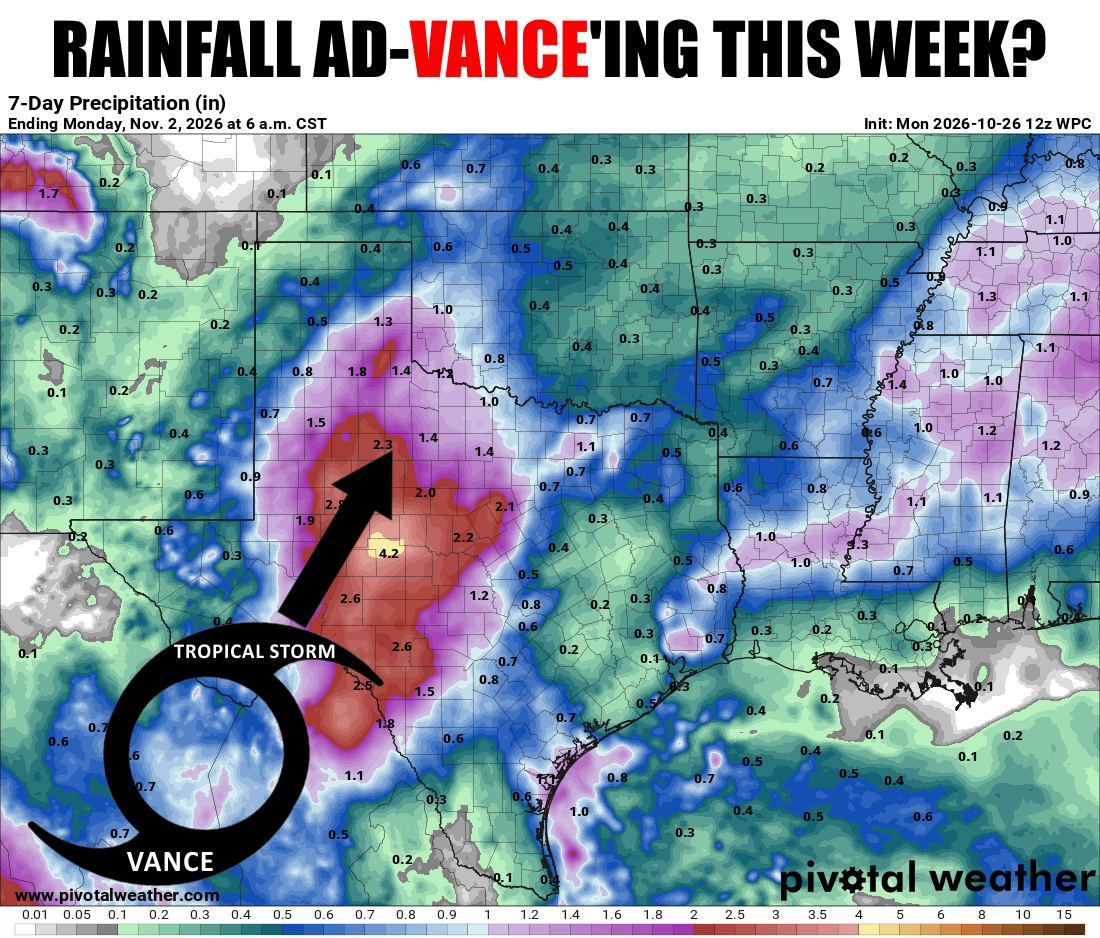
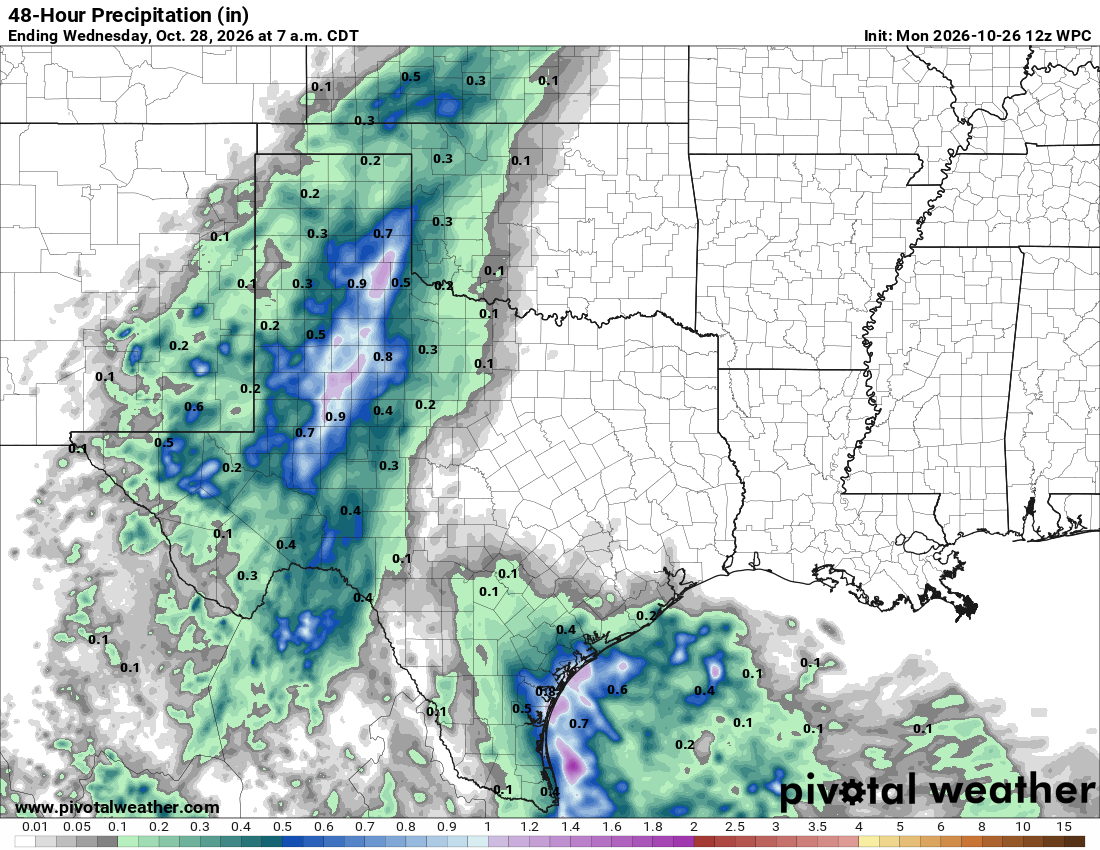
This week is sort of a make-or-break episode for the drought that we've seen
continuously spreading and intensifying since August. Just depends on where
that rain falls, and who gets enough to make a difference. And if you think that
5-day rainfall forecast above looks good, check out the 7-day!


Several questions...is it really gonna be that widespread? Well, given that
storms are expected, probably not. Maybe more hit-and-miss'ish in some areas.
And, can western Oklahoma really expect to get anything at all, given the track
record of the drought? I'm hopeful! I think there will be a sharp cutoff, but
where exactly will that cutoff be?

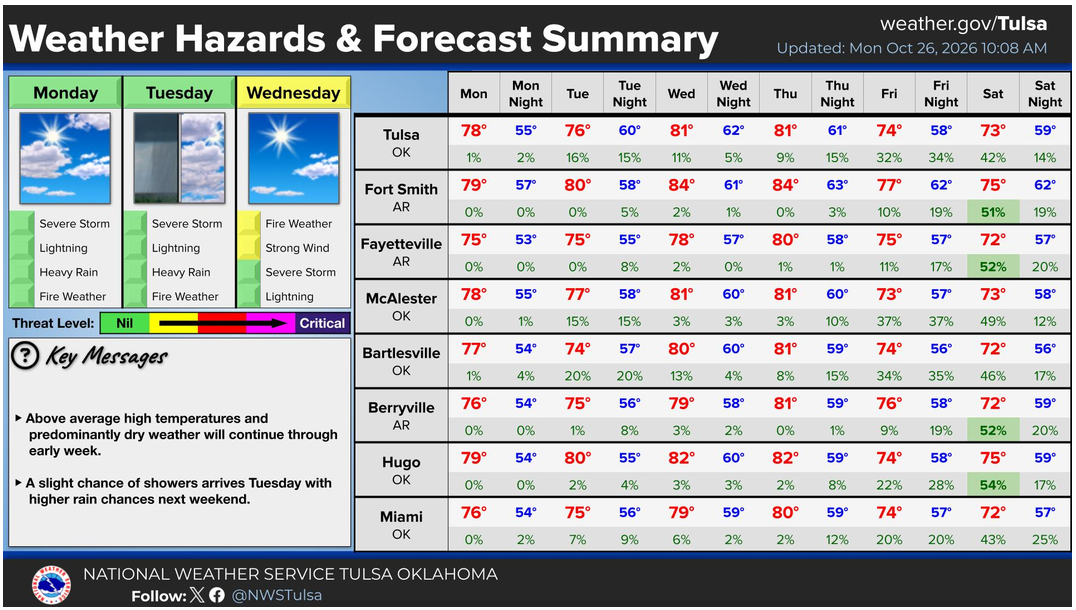
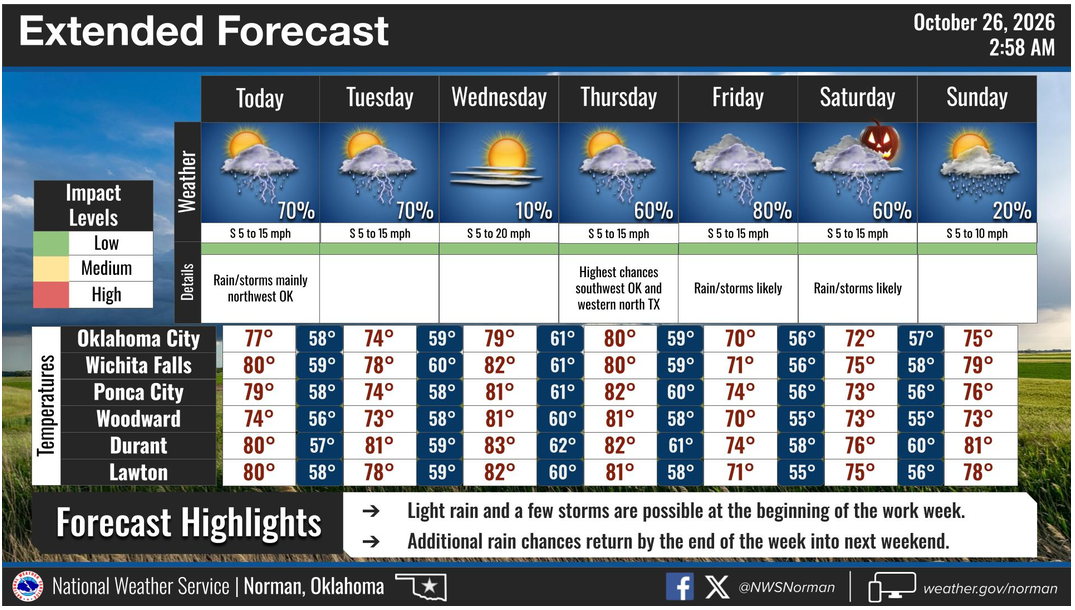
We're also dealing with the possibility of severe weather, which we already
saw last night with some big hail.


We'll see those severe storm chances almost every day this week in some part of
the state, and as we know in Oklahoma, best to stay weather aware as things
can change in a hurry.


Well, at least it's exciting? Drought is boring, so maybe this is a good
alternative. Know what else is exciting, at least to climatologists?

Cheese.

What else? Breaking all-time records, and we did plenty of that in February and
through the winter.


So I'm begging ya, or daring ya (whichever works), keep scrolling and read more
on that (and don't call me "more on").

----------------------------------------------------------------------------------

Record warmth fuels wildfires and drought in February
March 2, 2026

February ended as the warmest on record across Oklahoma, a distinction that
also pushed the climatological winter of 2025–26 to its warmest on record. The
unusual warmth combined with expanding and intensifying drought to create
critical fire weather conditions across much of the state. Those ingredients
culminated in a mid-February wildfire outbreak that burned more than 300 square
miles and forced evacuations across multiple counties. It was a month defined
by record heat, deepening drought and wind-driven flames.

Record warmth shatters February, winter marks
Oklahoma’s statewide average temperature finished at 51.1 degrees in February,
8.7 degrees above normal and the warmest February since records began in 1895.
The previous record of 50.6 degrees was set in 1954. That exceptional warmth
also propelled climatological winter (December 2025 through February 2026) to
its warmest on record at 44.3 degrees, 4.1 degrees above normal, surpassing the
previous mark of 43.7 degrees set in 1999–2000. For comparison, Oklahoma’s
coldest February occurred in 1905 at 27.6 degrees, and its coldest winter was
1979 at 31.2 degrees. Numerous individual locations also established records.
Oklahoma City’s February average of 52.3 degrees exceeded its previous February
record of 51.3 degrees from 1954, while its winter average of 44.7 degrees
topped the 1999–2000 record of 44 degrees. Tulsa tied its warmest winter on
record at 44.3 degrees; a mark previously set in 1921 and 1931.


February wildfire outbreak scorches Oklahoma
Wildfires burned nearly 200,000 acres across Oklahoma during February, with
most of the destruction stemming from fires that ignited on Feb. 17 and spread
over the following several days. Winds gusting up to 70 mph, combined with an
abundance of dry fine fuels, fueled the rapid growth. The Ranger Road Fire, the
largest of the outbreak, began in Beaver County and burned through northwest
Harper County into Kansas, ultimately consuming more than 280,000 acres across
the two states. The Stevens Fire in Texas County burned nearly 13,000 acres and
forced the evacuation of several communities. The 43 Fire, which began
southwest of Woodward, prompted the evacuation of approximately 4,000 residents
from the city of nearly 12,000. Additional evacuations were ordered in Beaver,
Carter, Osage and Washington counties. By Feb. 19, the Oklahoma Forestry
Service reported 42 active fires across 23 counties. Public safety officials
reported no homes were destroyed, though four volunteer firefighters were
injured battling the blazes.


Drought expands to cover nearly entire state
Drought continued its nearly unconstrained spread across the state for the
fifth consecutive month, covering nearly 92% of the state by the end of
February according to the Feb. 24 U.S. Drought Monitor report. The current
drought cycle began in August following nearly three months without drought.
Coverage increased from 32% of the state at the beginning of winter and from
72% at the beginning of February. The current extent is the highest observed in
Oklahoma since Dec. 6, 2022. Severe-to-extreme drought expanded to 32% of the
state by the end of February.


February by the numbers
• Statewide average temperature: 51.1°F, 8.7°F above normal — the warmest
February since records began in 1895
• Temperature extremes: High of 87°F at Waurika on Feb. 28; low of 6°F at
Eva on Feb. 20; lowest wind chill, –5°F at Eva on Feb. 22
• Warmest and coolest locations: Highest monthly average, 55.6°F at
Waurika; lowest, 45.8°F at Kenton
• Statewide average precipitation: 0.97 inches, 0.72 inches below normal
— the 40th-driest February since 1895
• Rainfall extremes: High of 3.26 inches at Broken Bow; low of 0 inches
at Arnett, Boise City and Eva
• Highest wind gusts (mph): May Ranch, 69; Beaver, 67; Boise City, 64;
Buffalo, 64; Kenton, 64; Eva, 63 — all reported on Feb. 17


Winter by the numbers
• Statewide average temperature: 44.3°F, 4.1°F above normal — the warmest
winter since records began in 1895
• Temperature extremes: High of 89°F at Mangum on Christmas Day; low of –12°F
at Kenton on Jan. 26; lowest wind chill, –24°F at Kenton on Jan. 26
• Statewide average precipitation: 2.13 inches, 3.24 inches below normal — the
seventh-driest winter since 1895
• Rainfall extremes: High of 6.17 inches at Broken Bow; low of 0.34 inches at
Boise City


March outlook favors rain, drought relief
The Climate Prediction Center’s (CPC) March outlook indicates increased odds of
above-normal precipitation across Oklahoma, especially in the northeastern
half, along with increased odds of above-normal temperatures statewide. The
CPC’s March drought outlook calls for drought to persist across the Panhandle
and far northwest Oklahoma, but improvement, with possible drought removal,
across other sections of the state.


###

Gary McManus
State Climatologist
Oklahoma Mesonet
Oklahoma Climate Survey
gmcmanus@ou.edu

March 2 in Mesonet History

Record Value Station Year
Maximum Temperature 85°F WOOD 2024
Minimum Temperature -2°F BOIS 2014
Maximum Rainfall 3.21″ HUGO 2023

Mesonet records begin in 1994.

Contact the Ticker

Follow the Ticker via the Mesonet social media accounts on Bluesky, X, or Facebook, or subscribe to our RSS feed.

To subscribe to or unsubscribe from the Ticker mailing list, or for questions about the Ticker or its content, please contact the Ticker Manager at OCS:

(405) 325-2253

ticker@mesonet.org