

| ... sign up for
the Ticker! |
... about the
Ticker |
||||||||||||
|---|---|---|---|---|---|---|---|---|---|---|---|---|---|
| . . . Day by Day . . . | . . . October 22 in Mesonet History* . . . | ||||||||||||
 |
|
||||||||||||
| Find a particular day's Ticker.
If you're a bit off, don't worry, because just like horseshoes, "almost" counts on the Ticker home page! |
* Mesonet History = since 1994
|
||||||||||||
|
|||||||||||||
| . . . Search the Ticker Archives . . . | |||||||||||||
|
|||||||||||||
|
|
|||||||||||||
|
|||||||||||||
| . . . Tell Others About This Ticker . . . | |||||||||||||
|
|||||||||||||
 Share Share
 Tweet Tweet
|
|||||||||||||
|
|||||||||||||
| . . . The Most Recent Ticker . . . | |||||||||||||
|
|||||||||||||
MESONET TICKER ... MESONET TICKER ... MESONET TICKER ... MESONET TICKER ...
October 21, 2024   October 21, 2024   October 21, 2024   October 21, 2024


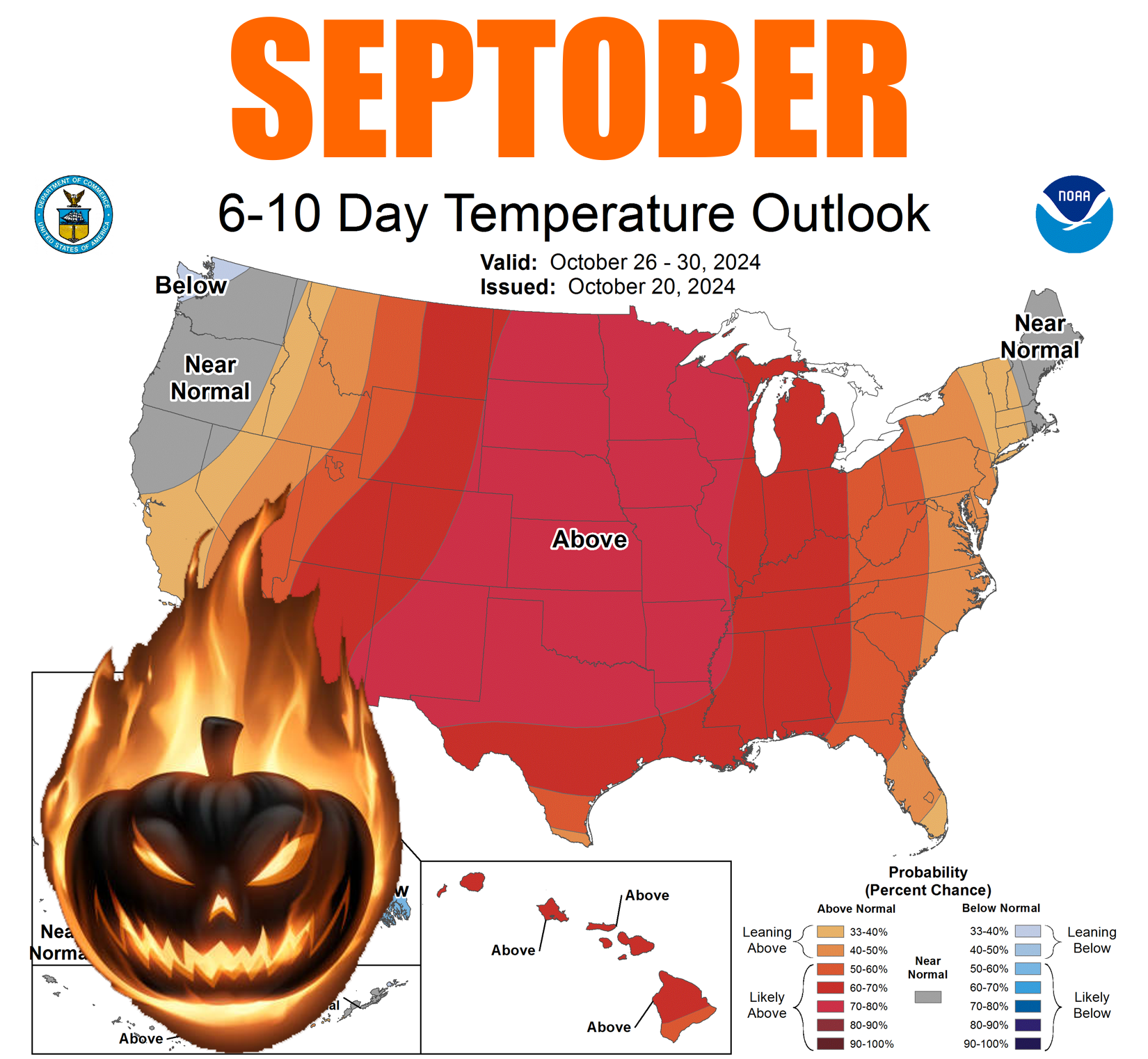
Septober?


https://ticker.mesonet.org/archive/20241021/Septober.png

I'm pressed for time, so read this quickly! I know it's been warm, and some people
love that (I ADMIT NOTHING!). The problem is the same pattern giving us this
warmth--the upper-level ridge over the western U.S.--is also giving us DRY, and
if you've ever had somebody give you DRY, you know just how painful that can be.
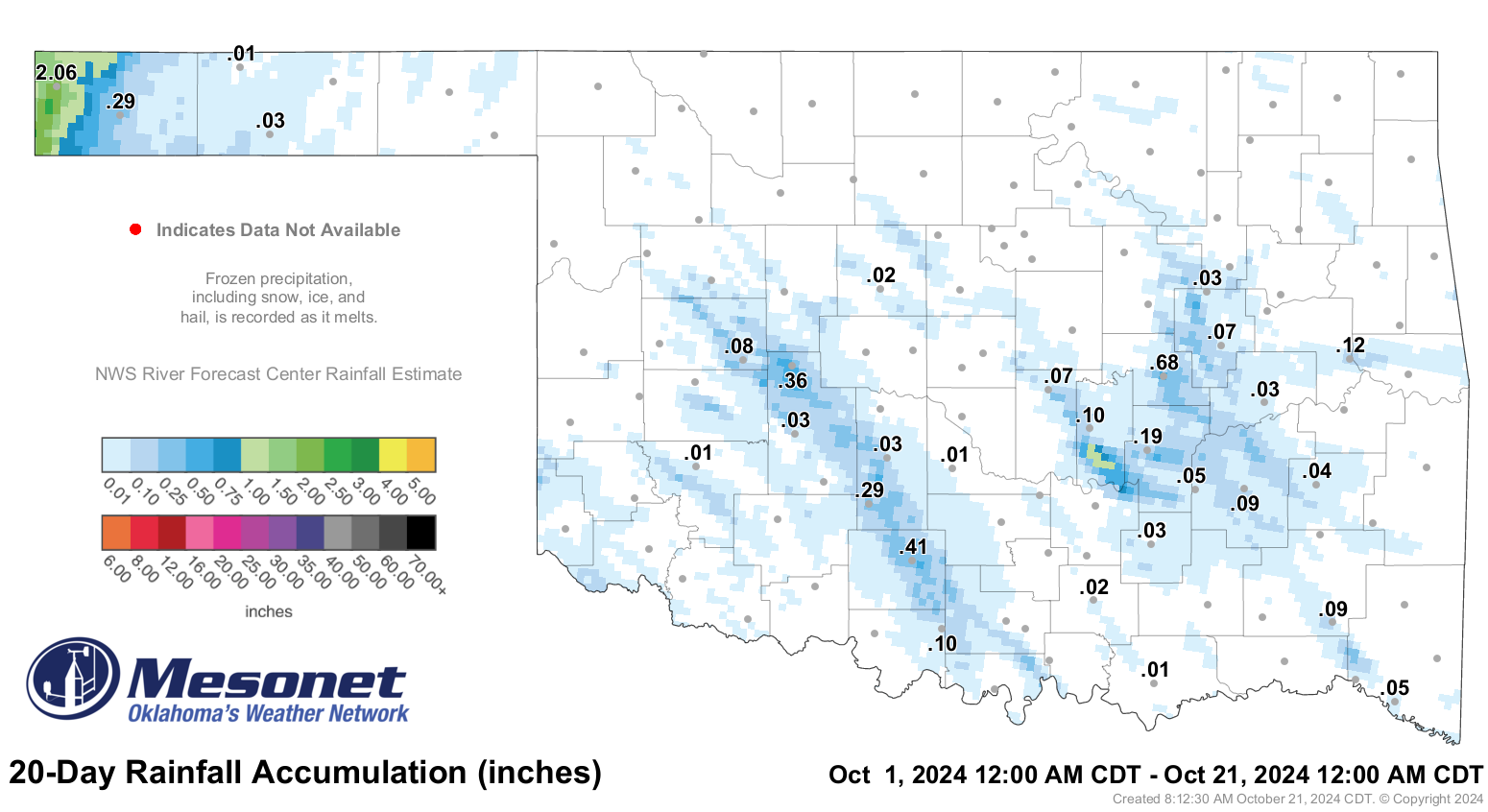
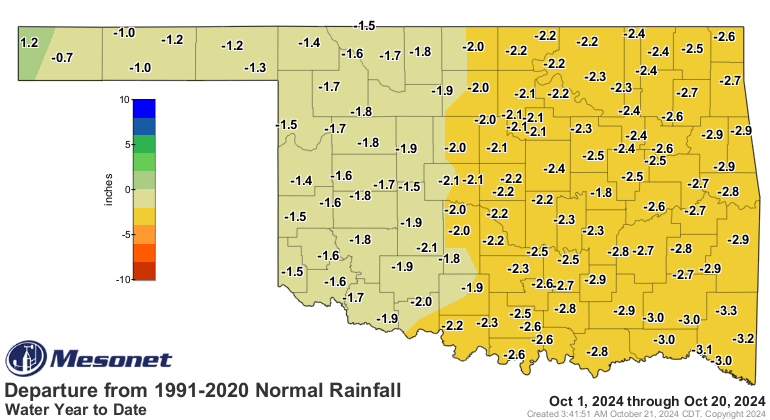
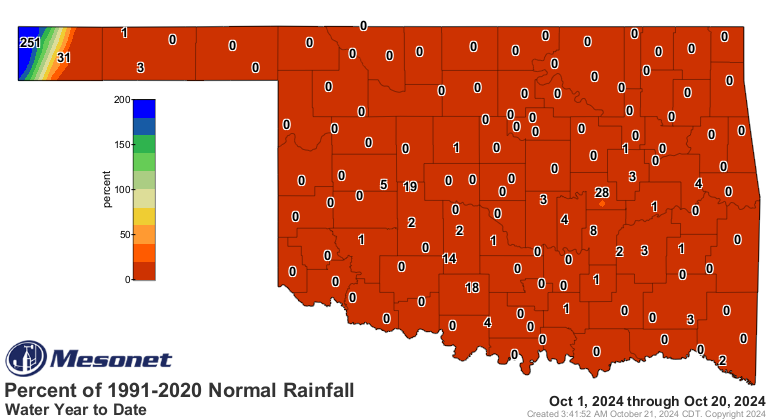
It's not only a drought spreader, but also an intensifier, and that's exactly what
we're seeing as many folks have gone 0-fer October (and then some).

https://ticker.mesonet.org/archive/20241021/oct-rainfall-thru21st.png

https://ticker.mesonet.org/archive/20241021/delwateryear_rain.current.png

https://ticker.mesonet.org/archive/20241021/pctwateryear_rain.current.png

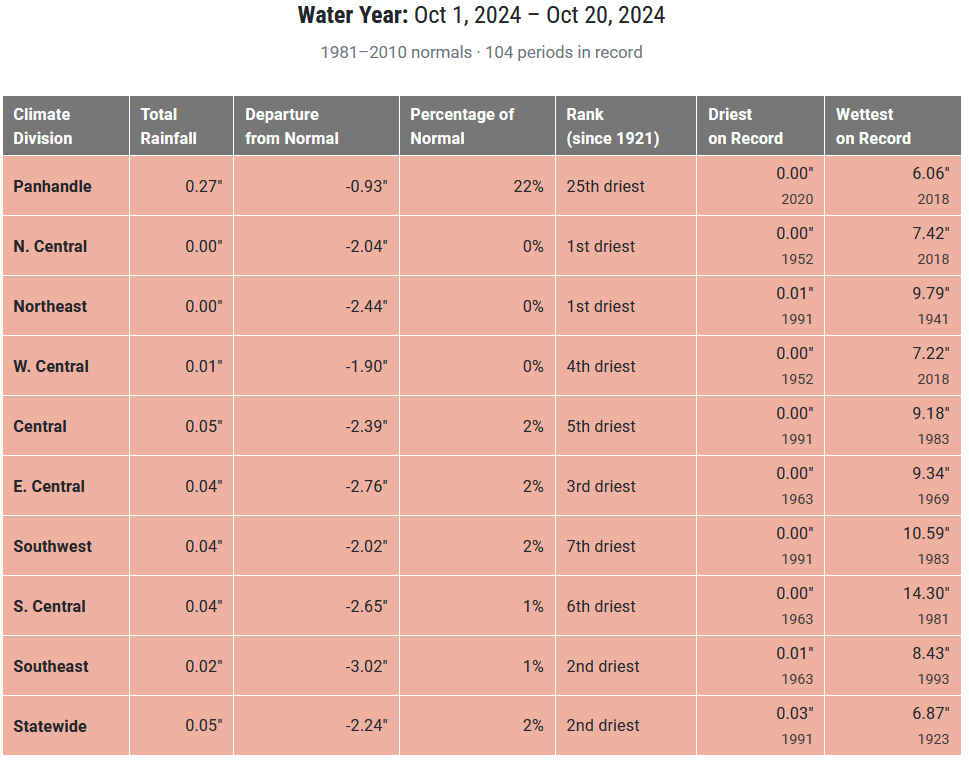
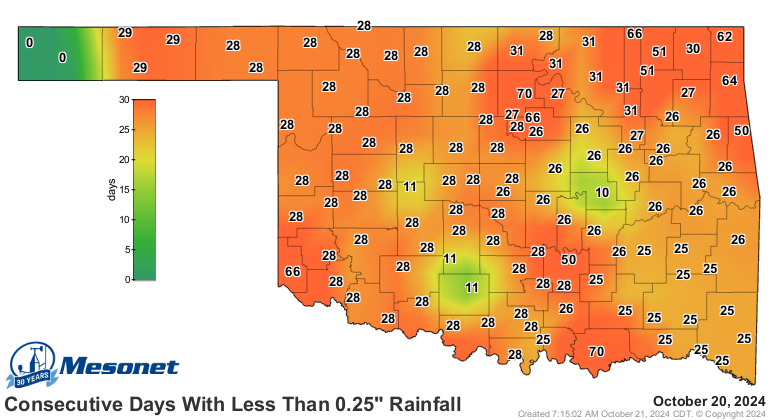
And obviously, if you're going 0-fer a period, you're at least tying the record
dry mark for said period, as we're seeing in north central and northeast OK (and
darned close in other parts of the state).

https://ticker.mesonet.org/archive/20241021/oct1-21-stats.png

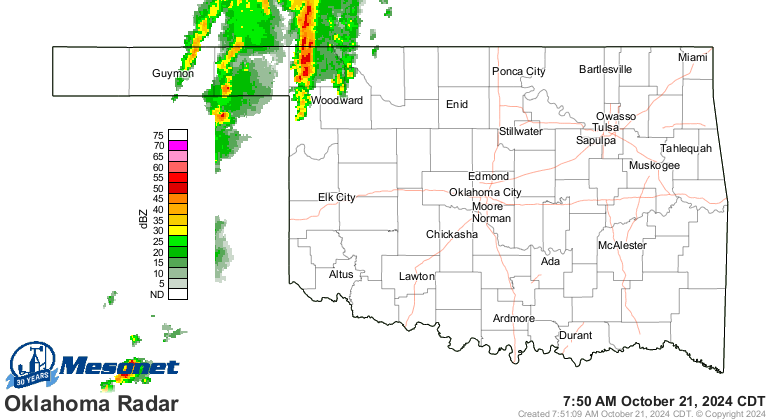
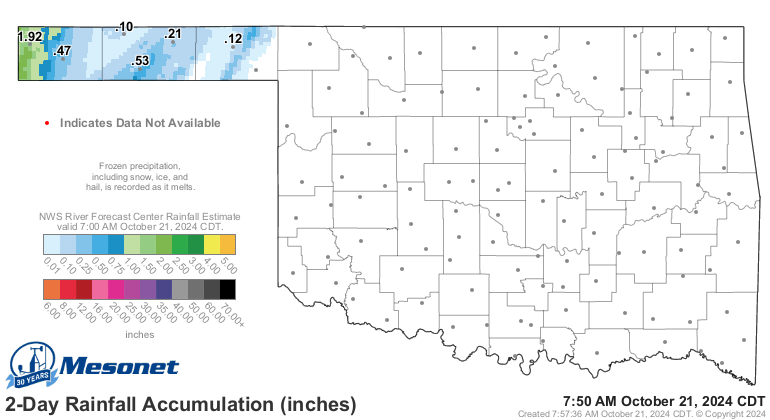
As luck would have it, SOME folks have gotten rain, and heck, it's raining right
now for crying out loud!

https://ticker.mesonet.org/archive/20241021/current-radar.png

https://ticker.mesonet.org/archive/20241021/rainrfc.48hr.png

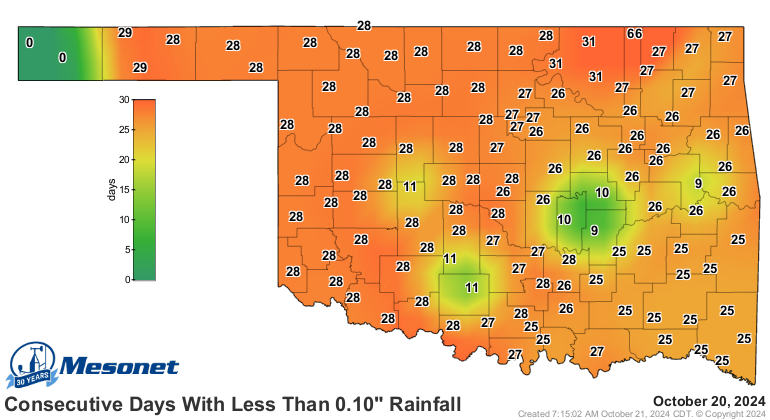
That's simply not enough to battle our current dry spell. Nor complex enough, I
guess. Work with me...I switched to Sanka.

https://ticker.mesonet.org/archive/20241021/mesonet.rainfall.tenthinch.png

https://ticker.mesonet.org/archive/20241021/mesonet.rainfall.quarterinch.png

So lows in the 60s and highs in the 80s and 90s...yeah, that's pretty ridiculous
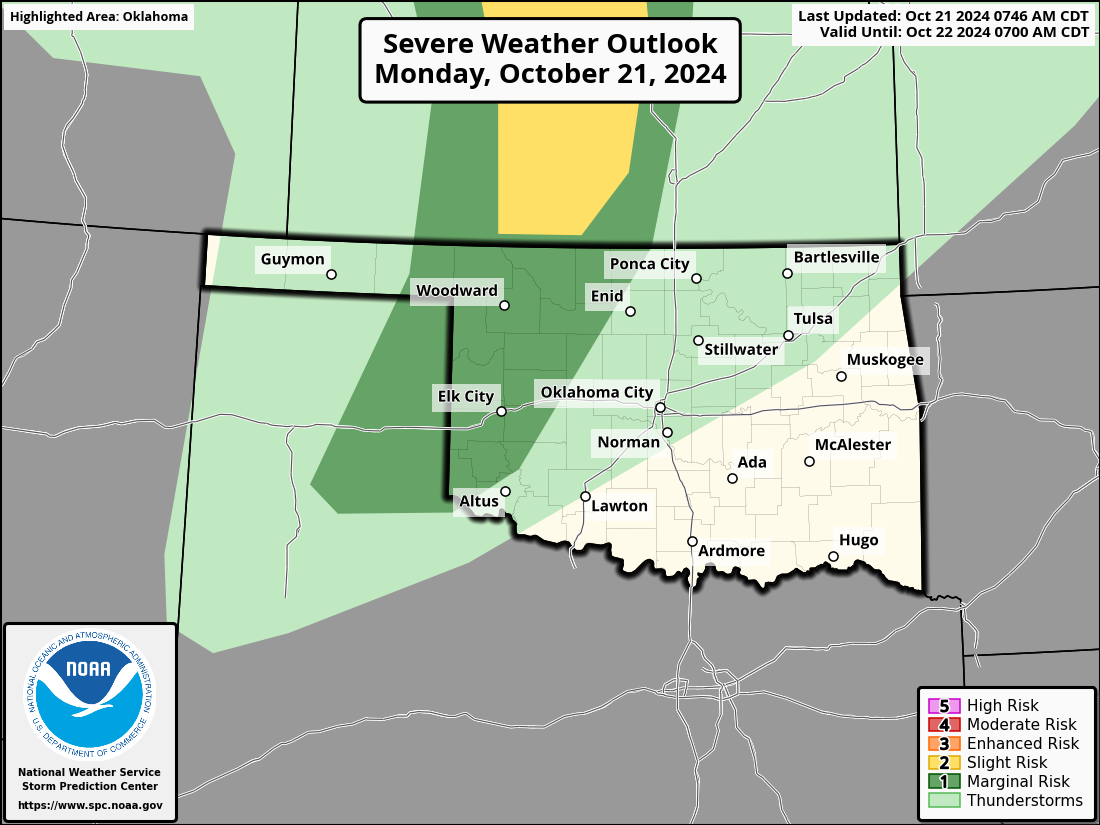
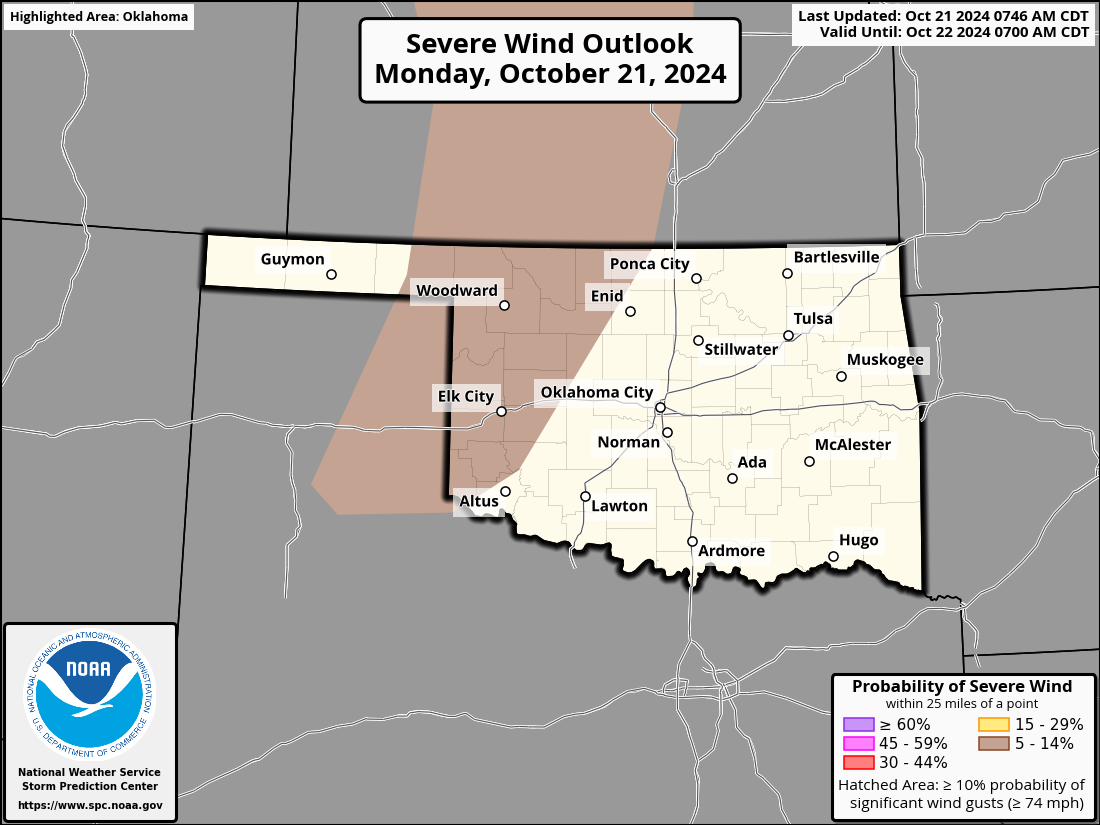
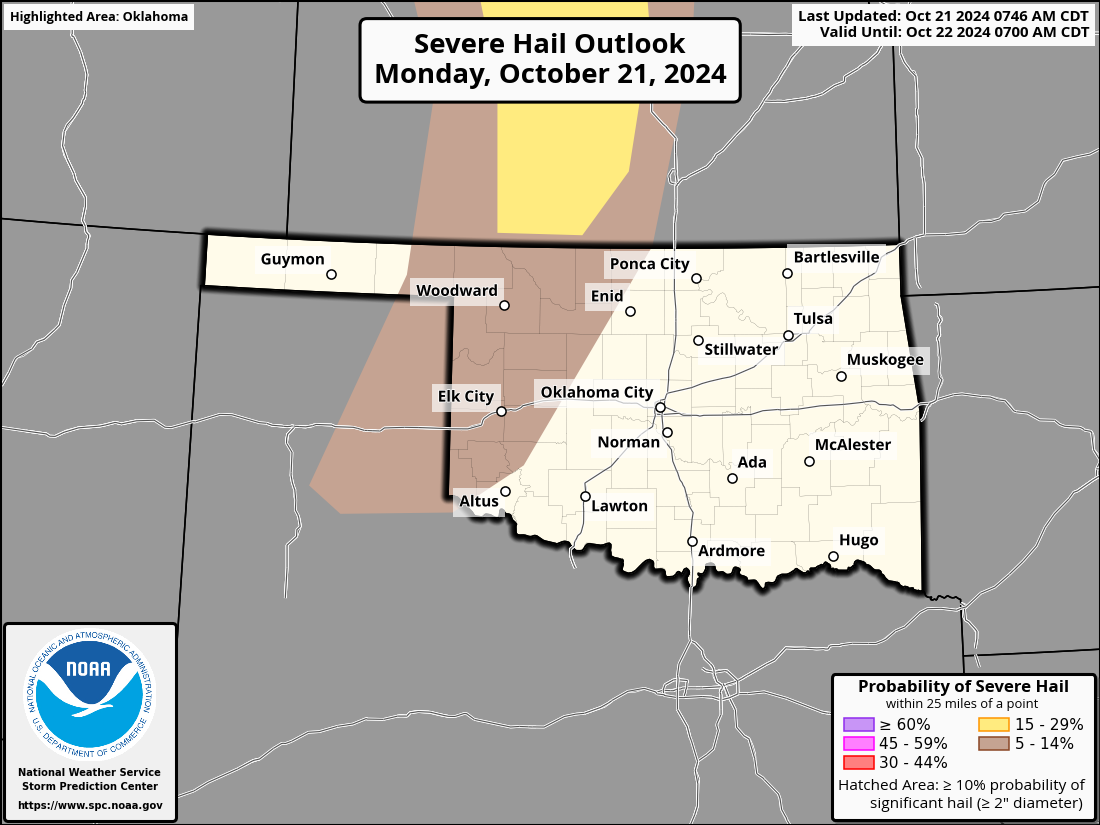
for this time of year. Now with those storms going on in NW OK, there will be
a chance of severe weather, which has thankfully been in short supply this fall.
Unfortunately, that's due to drought. Large hail and severe winds are the
primary threat this afternoon into tonight.

https://ticker.mesonet.org/archive/20241021/OK_swody1.png

https://ticker.mesonet.org/archive/20241021/OK_swody1_WIND.png

https://ticker.mesonet.org/archive/20241021/OK_swody1_HAIL.png

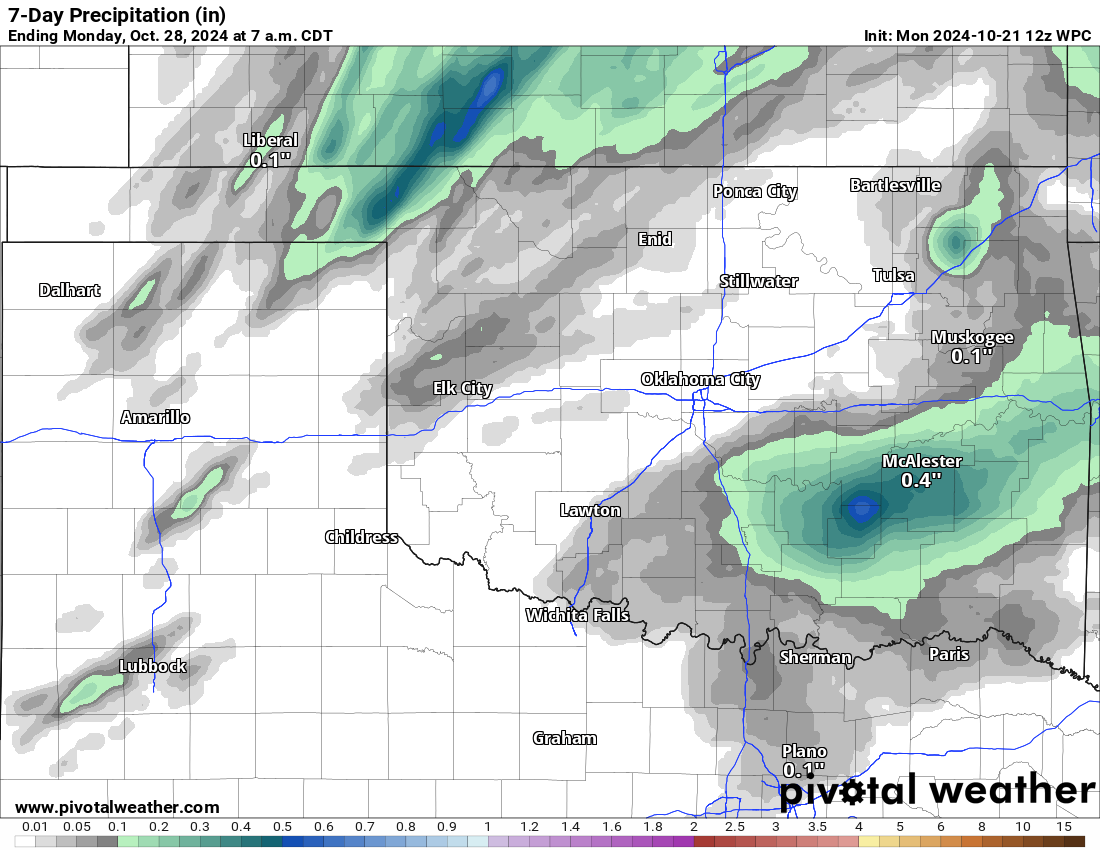
Rain will still be in short supply, with most of this falling today up in NW
OK.

https://ticker.mesonet.org/archive/20241021/7day-rain-forecast.png

There will be a front on Friday-ish, then maybe another in the middle of next
week. It doesn't look like one of our classic frozen Halloweens, however.

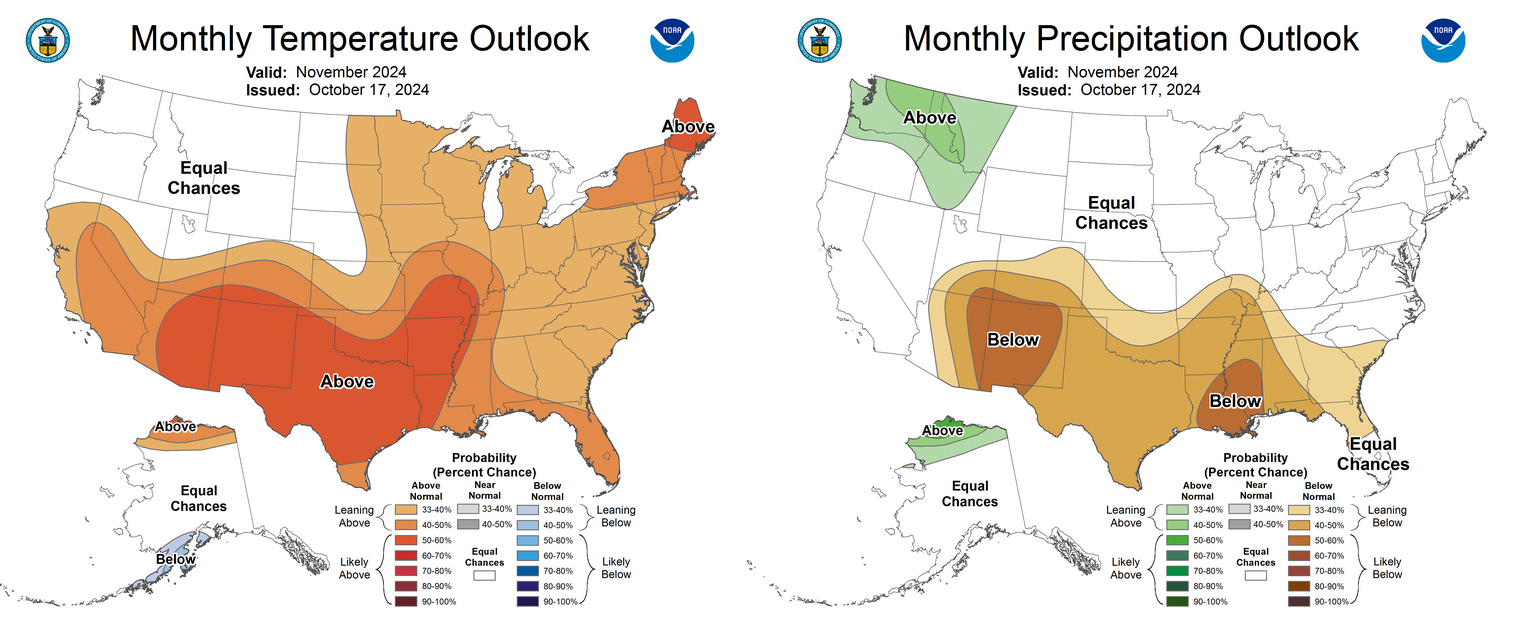
As we worry about November...odds are favoring...Novtober?

https://ticker.mesonet.org/archive/20241021/nov-outlooks.png

Gary McManus
State Climatologist
Oklahoma Mesonet
Oklahoma Climate Survey
gmcmanus@ou.edu
|
|||||||||||||